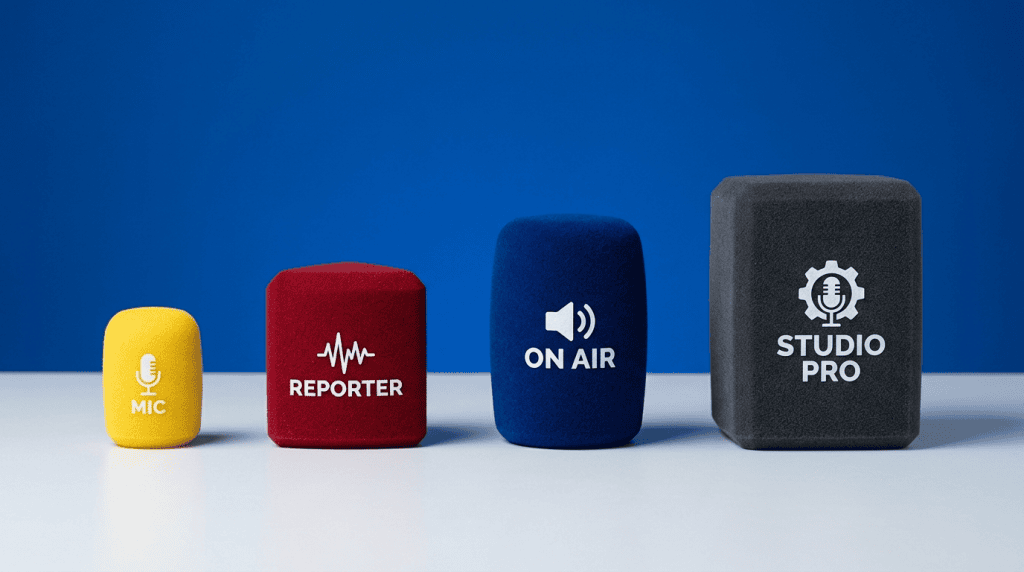
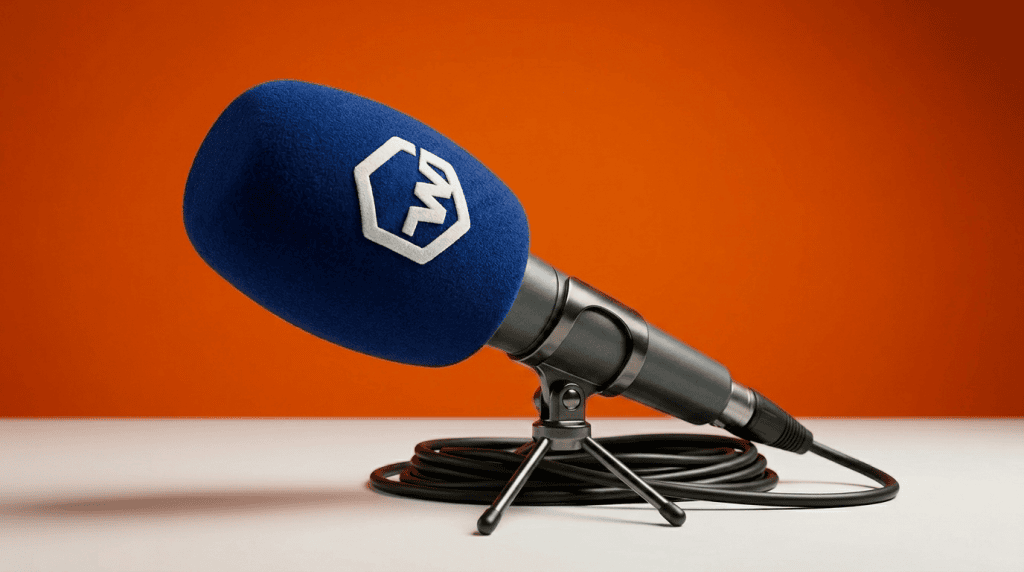
The shape of a microphone windshield affects more than aesthetics. It determines how many branding surfaces are available, how the microphone reads on camera from different angles, and how the windshield fits the physical geometry of the microphone barrel. Microphone Windshield Shape Selection follows directly from how and where the microphone will be used.
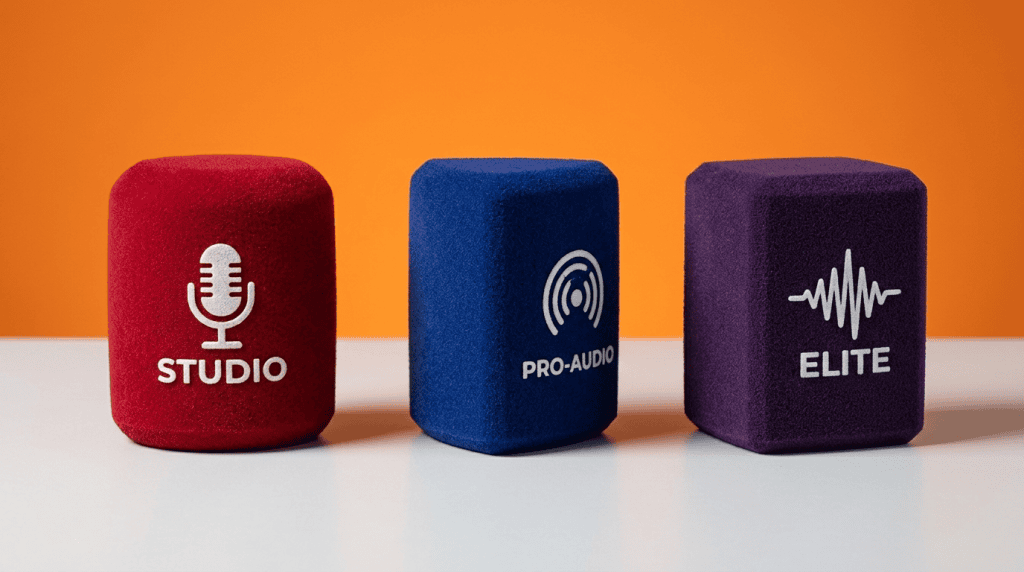
Table of Contents
Cylindrical windshields
The cylindrical windshield is the most widely deployed format in professional audio. It fits naturally over round-barrelled microphones and presents a continuous surface that reads cleanly on camera from any horizontal angle. In terms of branding, the cylindrical format accommodates two logo positions at approximately 180 degrees from each other.
Primary environments: studio microphone positions, radio stations, podcast studios, and on-camera use. Handheld interview use is less common — the cylindrical shape does not provide the flat reporting surfaces that field formats require.
Three-sided windshields
Three-sided windshields are the standard format for handheld interview microphones. The triangular cross-section provides three distinct flat faces at 120-degree intervals, each capable of carrying a logo. In a two-camera interview setup, at least one branded face is visible at all times regardless of microphone orientation.
The flat faces also provide a tactile grip advantage in field reporting. Primary use environment: television news, outdoor interviews, press events, and sports reporting.
Four-sided windshields
Four-sided windshields provide four flat branding surfaces at 90-degree intervals — the maximum logo visibility across the widest range of camera angles. This format is well-suited to multi-camera broadcast environments and to scenarios where multiple different logos are required on a single windshield.
Primary environments: handheld broadcast use in television reporting and high-visibility media events. Also appropriate for press conferences where on-camera branding from variable angles is a production requirement. The broader context for shape selection within a wind protection specification is covered in the wind protection selection guide.
Custom geometries
Custom windshield shapes are specified when standard profiles do not match the microphone’s physical form or the production’s visual requirements. The most technically relevant current example is the rectangular internal cavity windshield designed for compact wireless transmitter systems — Rode Wireless GO series, DJI Mic 2, Hollyland Lark, and similar formats where the transmitter body is rectangular rather than round.
These systems require a windshield with a rectangular internal opening. A standard cylindrical windshield cut for a round microphone barrel does not seat correctly on a rectangular transmitter. The external profile can still be cylindrical or multi-sided; the internal geometry must match the device.
Fully bespoke geometries beyond standard profiles are produced by specialist manufacturers such as Foam Conversion (UK), where custom tooling makes non-standard shapes a routine production capability.
Choosing between formats
The decision comes down to three criteria: microphone type and form factor, camera setup and likely angles, and branding requirements. For stationary studio microphones, cylindrical is the default. For handheld interview microphones in multi-camera environments, three-sided or four-sided formats provide better coverage. For wireless compact systems, custom internal geometries are a technical necessity.
Where branding is not a requirement, shape selection simplifies to acoustic and physical fit — standard unbranded foam windshields are available for most standard barrel diameters. For branded applications, shape selection should be part of the initial brief. The logo preparation guide covers what shape choice means for artwork files and design specifications.
Microphone Windshield Shape Selection: FAQ
Which shape is best for television news reporting?
Three-sided or four-sided windshields are standard for television news. Both formats provide flat branded faces visible from multiple camera angles during handheld reporting. Three-sided is the more common choice; four-sided offers slightly broader angle coverage.
Can a cylindrical windshield be used for handheld interview work?
Yes, but it is not the optimal format. A cylindrical windshield provides only two logo positions and presents a curved surface from most angles. For branded handheld use in front of cameras, three-sided or four-sided formats are more appropriate.
What is a rectangular internal cavity windshield?
A windshield with a rectangular internal opening, designed to fit compact wireless transmitter systems such as the Rode Wireless GO series and DJI Mic 2. The external profile is typically cylindrical or multi-sided; the internal geometry matches the rectangular transmitter body.
How many logos fit on each windshield shape?
Cylindrical: 2 logo positions. Three-sided: 3 positions. Four-sided: 4 positions. Custom shapes vary depending on the geometry specified.