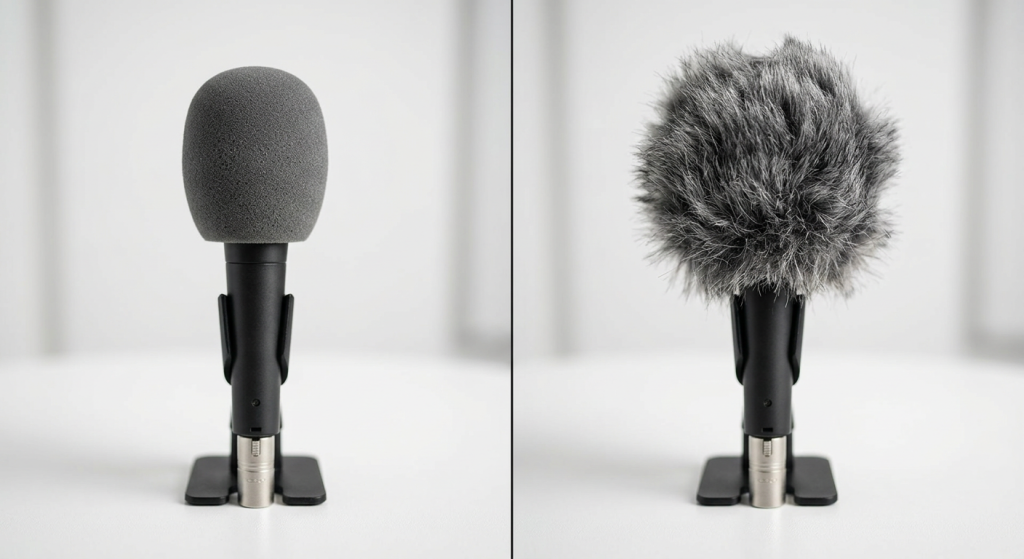
The failure is not dramatic. A fur windscreen does not split or crack — it just stops working as well as it did. The fibres compress, trap dust and skin oils, mat together, and the open structure that breaks up wind turbulence is gone. On a morning news run, that shows up as low-frequency rumble on the standup that post-production cannot fix cleanly without affecting the reporter’s voice. Multiply that across a crew of six ENG operators sharing kit from a common locker, and the problem is systematic.
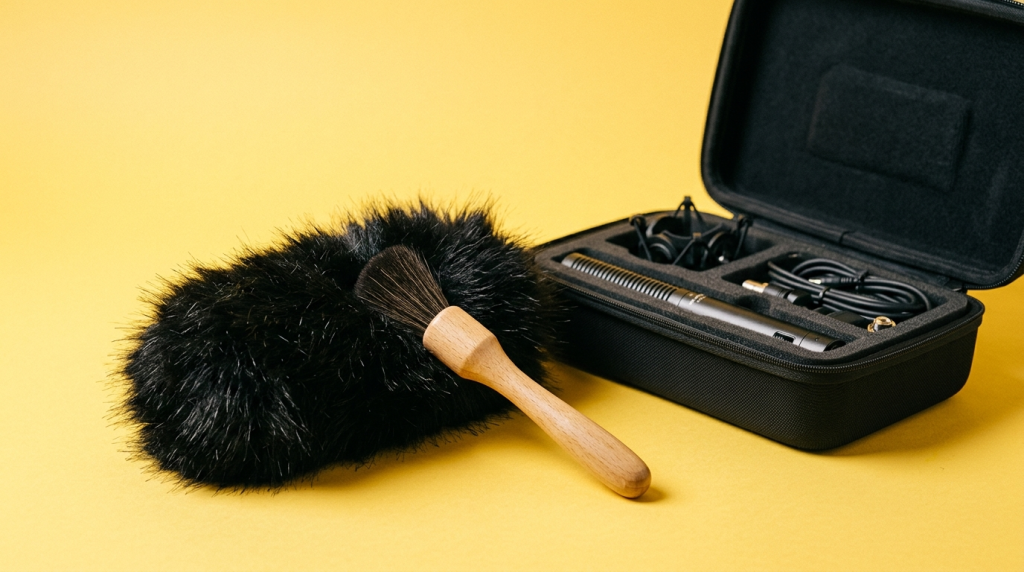
Table of Contents
What Actually Degrades Fur Performance
The wind-rejection function of synthetic fur depends on the loft — the physical depth and openness of the fibre pile. Three things destroy it in a working broadcast environment.
Dust and particulate build-up. Urban ENG shooting means exhaust particulates, pollen, and fine debris. These settle into the pile and reduce airflow through the fibres. The windscreen still looks intact but its acoustic porosity has dropped. You will not notice this on a calm day. In Beaufort 3–4 wind, the recording will. And if you are managing a fleet that regularly operates at those wind levels, understanding when a fur windscreen is sufficient versus when a full blimp is required helps you keep the right gear in service and the wrong gear under maintenance.
Moisture without proper drying. Rain, high humidity, and condensation from cold-to-warm transitions are routine in field work. Wet synthetic fur mats together. If it dries compressed — inside a closed bag or against a hard surface — the fibres bond in that compressed position. The pile does not recover on its own.
Improper storage. Storing a fur windscreen crammed into a pelican case or stuffed under other equipment flattens the pile mechanically. Repeated compression without recovery time produces the same result as moisture damage — reduced loft, reduced wind rejection.
Cleaning Protocol for a Fleet Environment
For a news crew using the same pool of windscreens across multiple shifts, cleaning cannot be ad hoc. It needs to be scheduled and documented so that degraded units are caught before they go out on assignment.
Routine dry cleaning — after every two to three uses
Use a soft-bristle brush — a clean, dry paintbrush or a purpose-made fabric brush — and brush the pile against the grain in short strokes. This lifts compacted fibres and dislodges surface dust without introducing moisture. Do this over a clean surface or bin. The amount of particulate that comes out of a windscreen that looked clean is often striking. This step takes under a minute per unit and extends the interval between wet washes significantly.
Wet washing — monthly or after heavy use
Hand wash in lukewarm water with a small amount of mild detergent — the kind used for delicate fabrics. Avoid anything with optical brighteners or fabric softener. Softener coats synthetic fibres and permanently reduces their ability to separate, which is precisely the structure you are trying to preserve.
Gently work the detergent through the pile with your fingers, rinse thoroughly, then press the windscreen between two clean towels to remove excess water. Do not wring. Do not put it in a tumble dryer. Lay it flat or hang it in open air and allow it to dry completely before returning it to service. Drying time at room temperature is typically several hours — overnight is safer for thicker pile models.
Check the internal foam insert separately. On most synthetic fur windscreens, the foam layer sits inside the fur slip cover. Foam that has absorbed moisture and not dried properly will develop odour and can transfer that to the fur. If the foam is degraded — crumbling or permanently compressed — replace it. Running a windscreen with failed internal foam defeats the purpose of the fur layer on top.
Storage That Preserves Loft
Storage is where most fleet managers lose ground quietly. A windscreen that has been cleaned and dried correctly will re-compress if stored badly.
Keep fur windscreens in a breathable container — a fabric pouch or an open-mesh bag. Hard-shell cases are fine for transport but should not be used for long-term storage with windscreens packed tightly. Each unit should have space to maintain its shape. If you are managing a rack or drawer system at a broadcast facility, hanging windscreens individually or storing them upright in labelled slots is more practical than stacking.
Label each windscreen in the fleet with a number or crew identifier. This supports rotation — ensuring units cycle evenly through use and cleaning rather than the same two windscreens going out every day while the others sit untouched. It also makes it possible to track which unit produced a complaint from a field operator, and pull it for inspection rather than guessing.
When Cleaning Is No Longer Enough
Synthetic fur does not last indefinitely. A windscreen that has been washed repeatedly, used in heavy rain, and operated across multiple years of ENG work will eventually reach a point where cleaning restores nothing. The test is simple: after a thorough wash and full drying, hold the windscreen up to a light source and look at the pile from the side. If the fibres are still lying flat and matted after drying, the structure is gone. Continued use at that point means accepting degraded wind rejection. For a fleet, that is a scheduled replacement, not an emergency — which is exactly why a maintenance log matters.
The full range of replacement options and fur specifications worth considering for a fleet refresh is covered in the deadcat microphone windscreens guide on this site.
The Protocol That Pays Off
Dry brush after every two to three uses, hand wash monthly, dry flat in open air, store in breathable pouches with space, rotate units on a numbered log. That is the full protocol. It takes minutes per unit and extends service life long enough to make the maintenance habit cheaper than early replacement — across a crew of six, meaningfully so.
FAQ
Can you machine wash a fur microphone windscreen?
Not recommended. Machine washing — even on a delicate cycle — subjects the pile to mechanical agitation that compresses and tangles fibres. Hand washing in lukewarm water gives you control over how much force the pile is exposed to, which matters for preserving loft.
How do you know when a fur windscreen needs replacing rather than cleaning?
After a full wash and complete air drying, check the pile from the side. If the fibres are still flat and matted, cleaning has reached its limit. Loft that does not recover after drying will not improve with further washes.
Does fabric softener help restore compressed fur?
No. Fabric softener coats synthetic fibres and reduces their ability to separate from each other — the opposite of what you want. Avoid it entirely when washing any synthetic fur windscreen.
How often should a fleet windscreen be replaced?
This depends on use intensity and care. A well-maintained windscreen used in active ENG work typically shows structural degradation after two to three years of regular use. A maintenance log that tracks washing cycles and field complaints makes the replacement decision objective rather than guesswork.