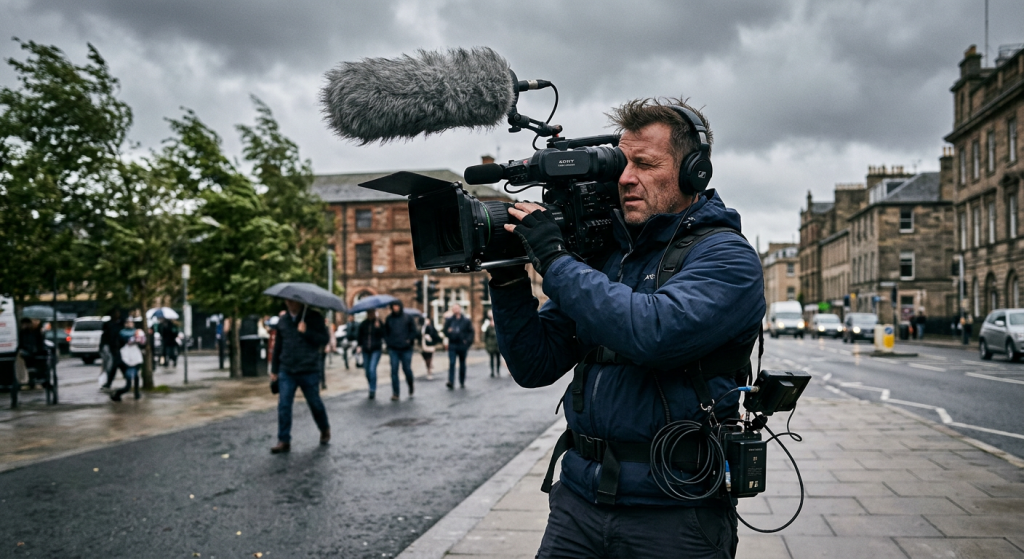
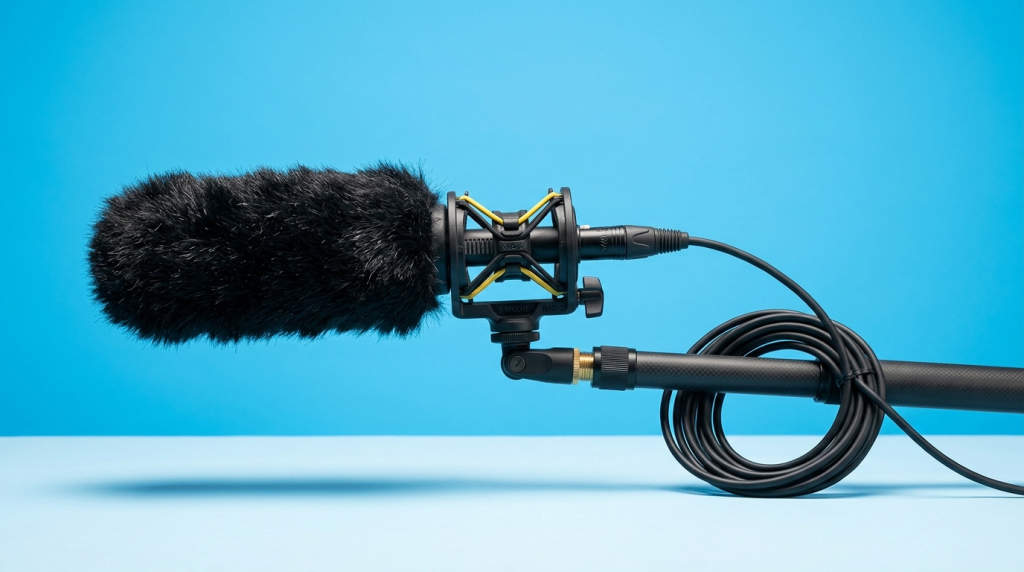
A foam microphone windscreen looks like a small accessory, but in a live broadcast it works as the first line of sound protection. It reduces wind noise, smooths out plosives, and protects the capsule from moisture and debris — all while preserving speech intelligibility and natural tone. For TV studios, radio stations, podcasters and field crews, a foam microphone windscreen is not a decorative element. It is a standard part of the signal chain.
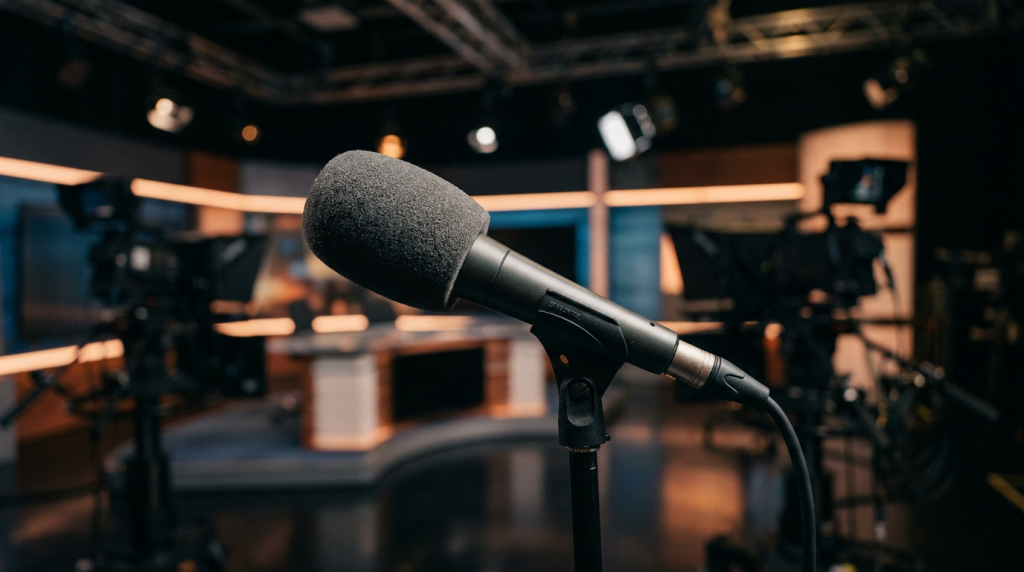
Table of Contents
What Does a Foam Microphone Windscreen Actually Do?
A foam microphone windscreen is made from open-cell acoustic foam that slows down and disperses airflow before it reaches the diaphragm. Instead of a direct impact on the capsule, the microphone receives a calmed, diffused stream — which significantly reduces the chance of sharp transient spikes in the signal.
Foam Microphone Windscreen Protection: Wind, Plosives and Breathing
Without a foam microphone windscreen, gusts of wind, breath and plosive consonants such as “p”, “b” and “t” generate powerful low-frequency bursts that can easily overload a recording chain or clip a broadcast limiter. The foam windscreen creates a labyrinth of open pores that breaks up the airflow and reduces the energy of each impact. The result is a controlled, usable signal instead of a sharp pop in the recording.
Protecting the Capsule from Dust and Moisture
Foam also acts as a physical barrier that keeps saliva, moisture and fine dust particles away from the sensitive capsule. This is especially important for microphones used actively by presenters, anchors and reporters. Over time the foam windscreen absorbs what would otherwise reach the diaphragm. A worn foam cover is far easier and cheaper to replace than a damaged microphone.
Foam Microphone Windscreen vs Recording Without Protection
A microphone without a windscreen may look clean on camera, but real broadcast conditions are rarely laboratory conditions. Outdoor locations, air-conditioned studios, and close-mic vocal technique all introduce variables that create audible artefacts when there is no protection in place. According to research published by the Audio Engineering Society, even moderate airflow directly on a microphone capsule can generate noise levels that are difficult to remove in post-production.
Real Broadcast Scenarios: Outdoor, Studio, Live Events
On location, even a light breeze generates chaotic low-frequency bursts that overwhelm speech when the microphone is unprotected. In studios, presenter breathing, HVAC airflow and fast microphone repositioning create brief but clearly audible signal spikes without a foam microphone windscreen. At concerts, sports broadcasts and live events, large hand movements and changing microphone positions add mechanical and air noise that a quality foam windscreen effectively absorbs.
How a Foam Microphone Windscreen Affects Sound Quality
One of the most common concerns among engineers is how much a foam microphone windscreen changes the sound. High-quality open-cell acoustic foam provides measurable wind noise reduction while having minimal impact on high-frequency detail and speech clarity. A correctly chosen foam windscreen works as a targeted filter for problem noise — not as a blanket over the microphone.
Acoustic Transparency and High-Frequency Detail
Acoustic transparency refers to the ability of a material to block unwanted airflow without attenuating the useful audio signal. In professional foam microphone windscreens, the pore structure is engineered to intercept large turbulent air masses while allowing the sound wave itself to pass through — including the consonants and sibilance that carry speech intelligibility. Where minor high-frequency rolloff occurs with denser foam solutions, a small EQ adjustment in the upper range fully compensates for it.
When a Foam Windscreen Is Enough, and When You Need More
A foam microphone windscreen is the right solution for the vast majority of speech-based applications: news, interviews, studio programmes, podcasts and visual radio. In extreme outdoor conditions — strong sustained wind, fast movement, exterior sports coverage — a fur overcover or full blimp system is added on top, but For a direct comparison of when fur outperforms foam and when the base layer alone is enough, our foam vs fur windscreen guide covers the trade-offs in detail. Even in those setups the foam microphone windscreen remains the base layer of protection around the capsule.
Why Foam Microphone Windscreens Are Standard in Professional Broadcast
Foam microphone windscreens became a broadcast standard not out of habit, but because of their predictability and consistency. They deliver a well-understood trade-off between protection, audio performance and on-camera appearance that works for engineers, producers and visual directors alike.
Reliability on TV, Radio and Live Production
In broadcast there is no margin for error: a single uncontrolled pop or wind burst is immediately audible to every viewer and listener. A foam microphone windscreen adds a simple but highly reliable element to the system — one that is always in place, always performs consistently, and does not require the presenter to maintain perfect microphone technique. For radio stations and podcast studios it also addresses hygiene and equipment longevity: replacing a foam windscreen regularly is far simpler than servicing a microphone fleet.
When to Replace Your Foam Microphone Windscreen
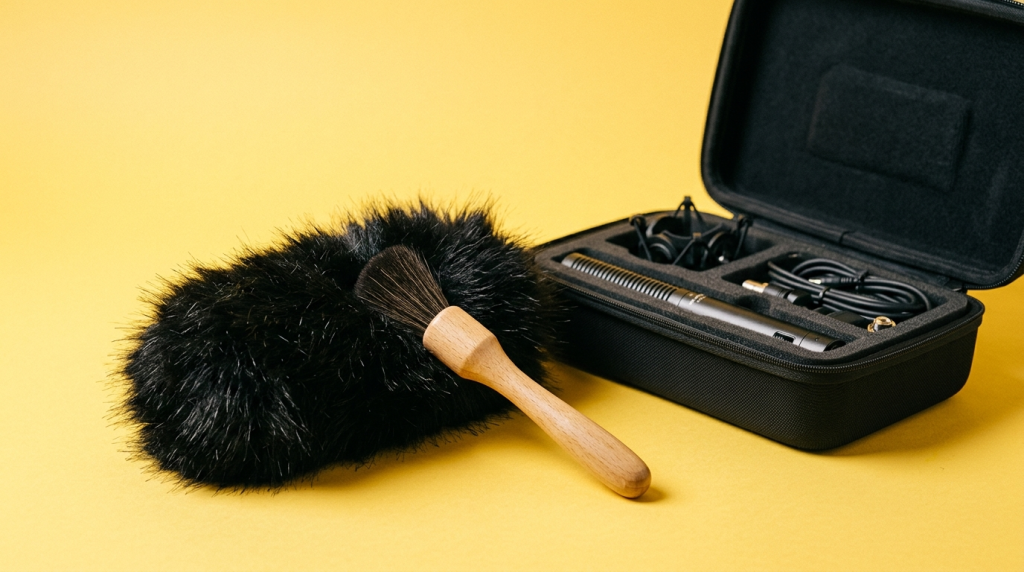
Over time, a foam microphone windscreen loses elasticity, changes colour and begins to break down — all of which affects both the on-camera appearance and the acoustic properties. If the foam has visibly discoloured, become stiff to the touch, or no longer fits the microphone securely, it should be replaced. Regular replacement reduces the risk of accumulated contamination reaching the capsule and helps maintain stable, consistent sound quality throughout the microphone’s working life.
Summary: Small Accessory, Big Impact on Your Broadcast Audio
A foam microphone windscreen addresses several challenges at once: it protects the capsule from wind, plosives, breath and contamination while maintaining stable sound quality under real working conditions rather than ideal ones. For professional broadcasters, a foam microphone windscreen is not optional equipment — it is a baseline standard. Without it, every outdoor shoot, every close-vocal studio session and every live event becomes a variable that cannot be controlled in post.
If you are looking for professional foam microphone windscreens for TV, radio or live production — including custom branded options with your logo — explore the Line-IN.eu range. We supply broadcast-grade windshields to teams across Latvia and Lithuania, manufactured by Foam Conversion (UK) Ltd with over 40 years of expertise in acoustic materials.
FAQ
Does a foam microphone windscreen affect sound quality?
High-quality open-cell acoustic foam is designed to intercept turbulent airflow while allowing the sound wave itself to pass through — including the consonants and sibilance that carry speech intelligibility. Where minor high-frequency rolloff occurs with denser foam, a small EQ adjustment fully compensates. The trade-off between protection and audio transparency is well understood and manageable in any professional setup.
When is a foam windscreen enough, and when do you need a fur cover or blimp?
A foam windscreen handles the vast majority of speech-based applications: news, interviews, studio programmes, podcasts, and live events in moderate conditions. In extreme outdoor situations — strong sustained wind, fast movement, exterior sports coverage — a fur overcover or full blimp system is added on top. Even in those setups, the foam windscreen remains the base layer of protection directly around the capsule.
Why is a foam windscreen considered standard in professional broadcast?
Because it delivers predictable, consistent results without requiring perfect microphone technique from presenters. In broadcast there is no margin for error — a single uncontrolled pop or wind burst is immediately audible to every viewer or listener. A foam windscreen is always in place and always performs the same way, which is exactly what live production environments require.
Does a foam windscreen also protect the microphone capsule physically?
Yes. The foam acts as a barrier against saliva, moisture, and fine dust particles that would otherwise reach the diaphragm over time. For microphones used actively by presenters, anchors, and reporters, regular foam replacement is a standard maintenance practice — replacing a foam cover is significantly simpler and cheaper than servicing or repairing a microphone.
How do I know when to replace a foam microphone windscreen?
Replace it when the foam has visibly discoloured, become stiff to the touch, or no longer fits the microphone securely. Degraded foam loses both its acoustic properties and its protective function, and accumulated contamination can eventually reach the capsule. Regular replacement keeps sound quality stable and extends the working life of the microphone.
Can a foam windscreen be used indoors, or is it only for outdoor recording?
It is standard equipment in both environments. Indoors, presenter breathing, HVAC airflow, and fast microphone repositioning all generate brief but audible signal spikes without protection. In studios and radio stations, a foam windscreen also addresses hygiene — particularly relevant where multiple presenters share the same microphone.