
Colour matching microphone windshields correctly starts with choosing the right colour system. This guide explains the difference between RGB, CMYK, and Pantone (PMS), and why specifying a Pantone code is the most reliable method for accurate, consistent brand colour on foam windshields—whether you’re ordering 10 units or 500.
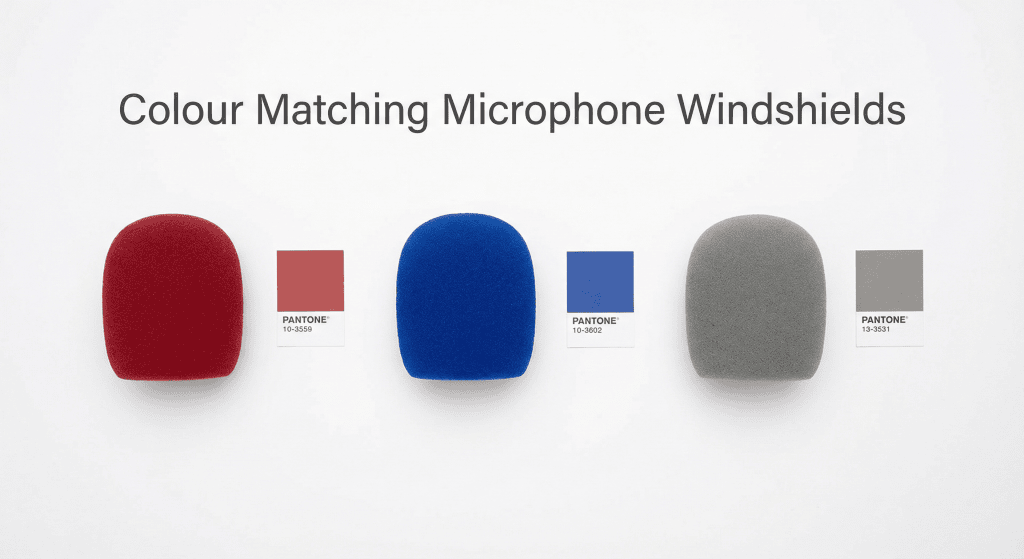
Table of Contents
Why Colour Accuracy Matters on Branded Windshields
A microphone windshield with your logo is a visible brand element—seen on stage, on screen, and in broadcast environments. If the foam colour doesn’t match your brand guidelines, it looks unprofessional, especially when multiple windshields are used together or compared against printed materials. Getting the colour right from the start avoids costly remakes and delays.
RGB: Digital Only — Not Usable for Physical Production
RGB (Red, Green, Blue) is the colour model used by screens—monitors, phones, and displays. Colours in RGB are produced by emitted light and cannot be directly replicated in physical materials like foam or fabric.
Key point: If your logo file is in RGB, it must be converted before ordering. RGB values are not usable for physical colour matching on windshields or any other manufactured item.
CMYK: Good for General Print, Unreliable for Exact Brand Colours
CMYK (Cyan, Magenta, Yellow, Key/Black) is the standard model for full-colour printing. It works acceptably for brochures and general print jobs, but has significant limitations for precise brand colour reproduction:
- Colour output varies between printers and production runs
- Exact shades are difficult to guarantee, especially on non-paper materials
- Foam, fabric, and plastic absorb colour differently than paper
For branded foam microphone windshields, CMYK is not recommended when consistent colour across batches is required.
Pantone Colour Matching Microphone Windshields: Why PMS Works Best
The Pantone Matching System (PMS) provides standardised colour codes used by manufacturers worldwide. Each code (for example, Pantone 186 C or Pantone 2728 C) specifies an exact colour formula that can be matched consistently regardless of material or production run.
Pantone colour matching for microphone windshields offers several key advantages:
- Batch consistency: Order today and reorder in six months—the colour will be identical if you specify the same Pantone code.
- Cross-material accuracy: The same code keeps your brand colour consistent across foam windshields, printed labels, and other branded products.
- No ambiguity: Instead of describing a colour as “dark red” or “royal blue,” a single Pantone code communicates exactly what’s needed.
- Faster production approvals: Both sides know exactly what the result will look like before production starts.
How to Order Branded Windshields with Accurate Colour
To get the best result when ordering from Line-in.eu, prepare the following:
- Your logo file in vector format (AI, EPS, or SVG preferred)
- Your Pantone colour code — from your brand guidelines or designer. If you don’t have one, we can help identify the closest match.
- Microphone model or windshield dimensions
- Quantity required — minimum order quantities may apply for custom colour work
If you only have an RGB or CMYK logo file, we can work with that too—we’ll identify the closest Pantone equivalent and confirm it with you before production begins.
Need Windshields Without Branding?
Not every project requires a logo. We produce a full range of high-quality unbranded foam microphone windshields in standard sizes and colours, using the same premium acoustically transparent foam. Contact us to discuss your requirements—branded or unbranded, we’ll find the right solution.
FAQ
Why can’t I just use my RGB logo file for ordering branded windshields?
RGB is a screen-based colour model that uses emitted light — it has no direct equivalent in physical materials like foam. An RGB value tells a monitor how to display a colour, but gives a manufacturer nothing reliable to match against. The file needs to be converted to a physical colour reference, ideally a Pantone code, before production can begin.
What’s wrong with specifying colours in CMYK?
CMYK works reasonably well for paper printing, but colour output varies between printers and production runs. Foam, fabric, and other non-paper materials absorb colour differently, which makes exact shade reproduction difficult to guarantee. For branded windshields where batch consistency matters, CMYK alone isn’t a reliable specification.
Why is Pantone the recommended colour system for microphone windshields?
Pantone codes specify an exact colour formula recognised by manufacturers globally. That means the same code produces the same result regardless of material or when the order is placed — whether you’re ordering 10 units now or reordering 500 six months later. It also eliminates ambiguity: a Pantone code communicates the colour precisely, without relying on subjective descriptions like “dark red” or “royal blue.”
What if I don’t have a Pantone code in my brand guidelines?
You can still place an order. If you provide an RGB or CMYK logo file, the closest Pantone equivalent can be identified and confirmed with you before production starts. Having a Pantone code is the most reliable starting point, but it isn’t a hard requirement.
What files and information do I need to prepare before ordering?
You’ll need a vector logo file (AI, EPS, or SVG), a Pantone colour code or an RGB/CMYK file to work from, your microphone model or windshield dimensions, and the quantity required. Custom colour work may have minimum order quantities.
Can I order windshields without a logo or custom colour?
Yes. Unbranded foam microphone windshields are available in standard sizes and colours, made from the same acoustically transparent foam used in branded production runs.