When you choose mic windscreen size, you are making a decision that affects three things at once: audio quality, physical security on the microphone, and on-screen appearance. A windscreen that does not fit correctly is worse than no windscreen in some respects – it can move during takes, fall off at critical moments, leave parts of the grille exposed, or deform from being forced onto a mic that is too large.
Getting size right is not complicated, but it requires knowing what to measure and understanding what tolerances are acceptable. This guide walks through the process of sizing foam windscreens correctly for any microphone, with specific attention to the broadcast and media context where reliability and appearance both matter.
Table of Contents
Why Size and Fit Matter
The primary function of a foam windscreen is to sit securely over the microphone’s capsule area and create a consistent foam layer around the entire grille. Any gap in coverage is a gap in wind and plosive protection. Any loose section is a potential source of movement noise or a risk of the windscreen shifting on camera.
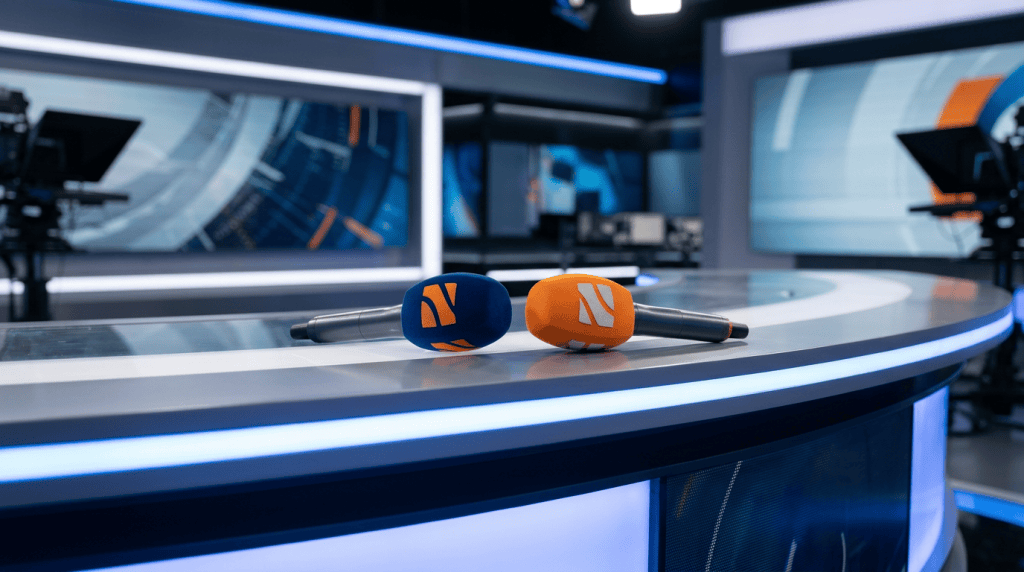
Beyond acoustic function, on a camera-facing broadcast microphone the windscreen is a visual element. A windscreen that sits slightly crooked, that has a visible overhang or that puckers at the opening because it is too large looks unprofessional. On a station that has invested in custom branded windscreens, a poor fit undermines the branding investment.
How to Measure Your Microphone for a Foam Windscreen
Diameter, length and grille shape
The two key measurements for a cylindrical foam windscreen are:
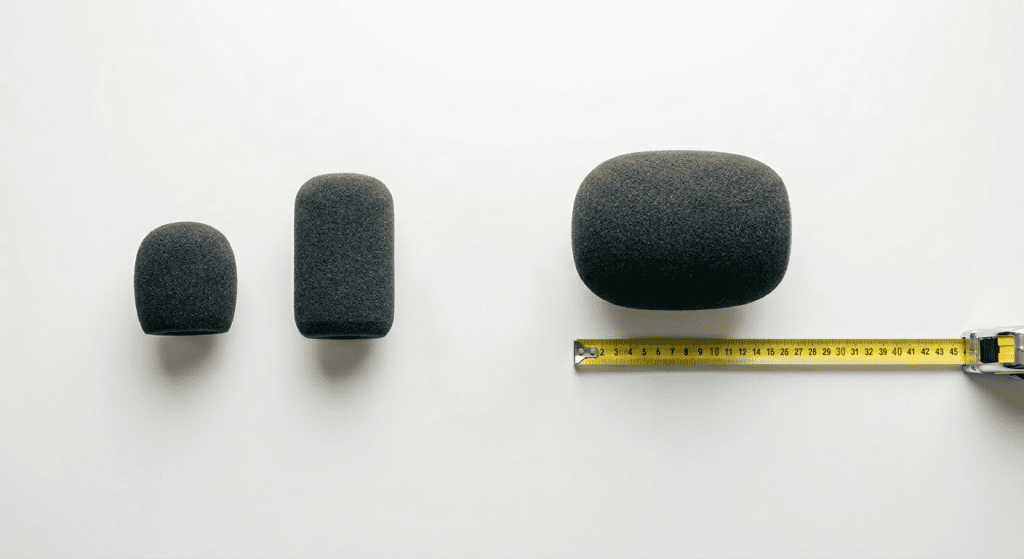
Internal diameter. Measure the outer diameter of the microphone’s grille at its widest point, in millimetres. This is the dimension the windscreen must accommodate. Foam windscreens have a specified internal diameter at rest (unstretched) that should be slightly smaller than the grille diameter – the foam stretches to grip the mic securely.
Length. Measure the length of the grille section you want to cover, in millimetres. For a handheld broadcast microphone, this is typically the full grille length from the top of the body to the tip of the head. For a shotgun microphone, it covers the main capsule section.
Many microphone manufacturers publish the grille diameter in their technical specifications. For common broadcast microphones – Shure SM58, Sennheiser e835, Electro-Voice RE50 – windscreen manufacturers often have standard sizes available by model name. For less common models, measuring directly is more reliable than assuming.
For non-cylindrical microphone heads (some condenser mics have a larger ball-shaped capsule housing), the measurement approach is the same but you are matching to the widest point of the head geometry.
How much stretch is acceptable
Open-cell polyurethane foam is elastic. A windscreen with an internal diameter slightly smaller than the mic grille will stretch to fit and grip securely. The acceptable stretch range is typically 5-15% of the windscreen’s internal diameter. Within this range, the foam grips reliably without being overstressed.
Forcing a windscreen onto a microphone that requires more than about 15-20% stretch risks tearing the opening edge over time and creates visible distortion of the foam shape. A windscreen that needs very little or no stretch to fit the mic will not grip securely and will move or fall off.
If you are between sizes, err toward the smaller windscreen – a slightly tighter fit is better than a loose one, provided the foam can accommodate the stretch without tearing.
Choose Mic Windscreen Size: Common Mistakes and How to Avoid Them
Too loose
A windscreen that slides or rotates freely on the microphone is not doing its job properly. Gaps at the opening let wind in directly to the grille. On camera, a sliding windscreen looks unprofessional and may need to be repositioned between takes. If your windscreen is not gripping firmly, you need a smaller internal diameter.
Too tight
A windscreen that must be forced onto the mic with significant effort risks tearing, especially at the opening edge where stress concentrates. Over time, a too-tight windscreen may permanently stretch or deform, losing its shape. It may also be difficult to remove quickly during a live broadcast, which creates operational problems.
Wrong length
A windscreen that is too short leaves part of the grille exposed – particularly problematic for plosive protection if the upper capsule area is uncovered. A windscreen that is significantly too long can fold or crease at the end, creating a visual distraction and potentially introducing handling noise from the loose material.
Ignoring the grille shape
Some microphone grilles have a taper, a non-cylindrical head shape, or a prominent basket at the top. A standard cylindrical windscreen may not suit these geometries. Purpose-shaped windscreens (balloon, bullet, or custom shapes) are available for microphones that need them. Checking the shape of your mic head against available windscreen profiles before ordering is worth doing. You can see the range of available shapes at line-in.eu.
Popular Mic Shapes and Matching Windscreens
Handheld dynamic microphones
The most common broadcast microphone type – Shure SM58 style, Sennheiser e-series, EV RE-series – has a cylindrical barrel with a rounded ball grille at the top. Standard cylindrical foam windscreens in appropriate internal diameter and length cover these models well. The internal diameter should match the barrel diameter just below the ball.
Studio and podcast microphones
Large-diaphragm condenser microphones and broadcast studio mics often have larger, more complex body shapes. Dedicated windscreens for studio mics tend to be larger in diameter and may be balloon or cube-shaped to accommodate the wider grille. Specific products for studio mic shapes are available separately from handheld windscreens – see Branded Studio Microphone Windshield Pro Line for an example.
Shotgun and camera-mounted microphones
Shotgun microphones have an elongated barrel with a much narrower diameter than handheld mics. Windscreens for shotgun mics are correspondingly longer and thinner. Correct length is particularly important here – the interference tube of a shotgun mic must be fully covered for consistent polar pattern performance. See the Branded Camera Shotgun Windshield as a reference for camera-mounted applications.
What Your Supplier Needs for a Perfect Fit
When ordering custom or bulk windscreens, provide your supplier with:
- The exact microphone model or models being fitted
- The grille outer diameter in mm (or the mic model so the supplier can reference their database)
- The desired coverage length in mm
- Any specific shape requirements (standard cylinder, balloon head, custom)
- Quantity and any branding requirements
A good supplier will cross-reference your measurements against their standard sizes and advise on the best match. For custom-shaped or unusual microphone models, some suppliers can produce made-to-measure windscreens. Contact the line-in.eu team for sizing advice and custom options.
For an overview of how microphone windscreens contribute to the full broadcast setup – including wind protection comparison between foam and fur – see the main guide: Foam vs Fur Windscreen: How to Choose the Right Wind Protection. For broadcast-specific selection criteria beyond sizing, see Mic Windscreen for Broadcast: 6 Ways the Right Choice Affects Your On-Air Quality. If you also need guidance on outdoor performance limits of foam, Foam Windscreen Outdoor Use: 4 Factors That Determine How Far It Goes covers that in detail.
Choose Mic Windscreen Size: FAQ
How do I measure my microphone for a foam windscreen?
Measure the outer diameter of the grille at its widest point, and the length of the grille section you want to cover. Both measurements should be in millimetres. Compare against your supplier’s size chart or send measurements directly to them.
What happens if the windscreen is slightly too small?
A slightly smaller internal diameter than the grille diameter is correct – the foam stretches to grip the mic. A stretch of 5-15% of the internal diameter is normal and secure. More than about 20% stretch risks tearing and distortion.
Can I use one windscreen size for all my microphones?
Only if your microphones are the same model or have the same grille dimensions. Different handheld microphone models have different grille diameters and lengths – using a single size across different models will result in poor fit on some.
Do foam windscreens come in different shapes?
Yes. Common shapes include cylindrical (for handheld and shotgun mics), balloon or bullet (for large-head condensers), and custom shapes for specific applications. The shape must match the geometry of the microphone head for proper coverage and fit.
My windscreen keeps sliding off during use – what should I do?
This indicates the windscreen internal diameter is too large for your microphone grille. Order a windscreen with a smaller internal diameter. The correct windscreen should require a small degree of stretching to fit and should grip the grille firmly without sliding.
Choose Mic Windscreen Size