The dead cat windscreen – that unmistakable fluffy fur covering you see on boom microphones at outdoor shoots and news events – is one of the most recognisable pieces of audio kit in professional production. But despite its visibility, many broadcast professionals are not entirely clear on when a dead cat is genuinely necessary versus when a quality foam windscreen is enough.
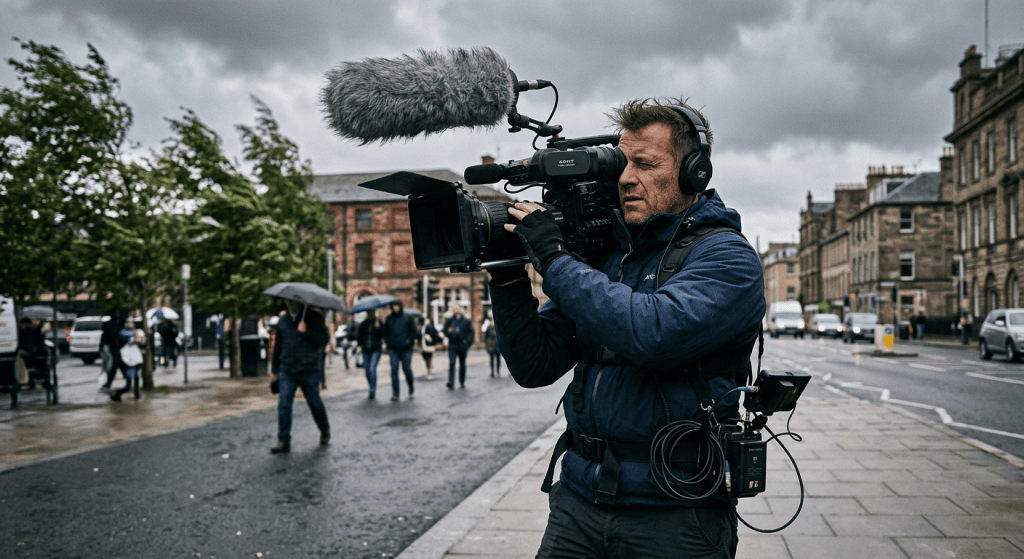
The dead cat windscreen earned its name from its resemblance to a long-haired fur pelt, and its function is straightforward: the long synthetic fibres create a thick, deep boundary layer that breaks up turbulent airflow before it can reach the microphone capsule. This makes fur windscreens dramatically more effective than foam alone in strong or sustained wind.
Here are five real-world situations where a dead cat windscreen is the right choice – and an honest look at where foam remains the better option.
Table of Contents
5 Situations Where a Dead Cat Windscreen Outperforms Foam
1. Outdoor ENG in variable wind
Electronic News Gathering crews covering stories outdoors in anything beyond a very light breeze face a fundamental problem: they cannot always control the microphone’s orientation relative to the wind, and they cannot stop for a second take. If your boom mic or camera-mounted shotgun is getting hit by a gusty urban wind, foam will fail – the telltale low-frequency rumble will appear on the recording.
In this scenario, a dead cat windscreen on the camera-mounted mic is standard professional practice. Many ENG crews keep a fur windscreen permanently fitted to outdoor camera kits and only remove it when working indoors, where the bulk becomes unnecessary and acoustically counterproductive.
2. Documentary filming in exposed locations
Location sound recordists on documentary productions in coastal, moorland, mountainous or desert environments routinely deal with wind that foam windscreens cannot tame. A sea-cliff interview, a hilltop landscape sequence, a desert dust storm – these are exactly the conditions for which dead cat windscreens were designed.
The standard professional solution is a blimp (a rigid acoustic cage) with foam lining on the inside and a fur windscreen fitted over the exterior. This dual-layer system provides the maximum wind protection available while maintaining acceptable audio quality. For reference on how professional boom microphone wind protection systems are constructed, the Rycote product range is a widely used industry reference point.
3. Sports coverage in exposed positions
Pitch-side microphones, commentary positions in open stadiums, and camera positions at motorsport or cycling events are often exposed to sustained ambient wind with no practical way to reposition. A commentator mic fitted with only foam is vulnerable in these environments.
Fixed boom microphones and plant microphones in these locations benefit from fur windscreens or combination systems. The dead cat windscreen adds significant wind attenuation without requiring any change to microphone positioning or technique.
4. Boom operation above actors or subjects outdoors
For drama production and documentary filming where a boom operator is working overhead, the microphone is continuously moving and cannot be positioned defensively against the wind. Boom operation in outdoor locations almost always calls for a dead cat windscreen, both because of the movement-induced airflow and because of any ambient wind present.
Indoor boom operation, by contrast, typically uses only foam or no windscreen at all – the acoustic transparency of a lighter solution is preferred when there is no wind to manage.
5. Interviews in genuinely windy conditions
There is a difference between a light outdoor breeze and a genuinely windy day. When an outdoor interview is happening in conditions where you can hear the wind audibly – rustling leaves, moving clothing, audible ambient noise – foam is likely struggling. If you are monitoring through headphones and hear wind noise building on the recording, a dead cat windscreen upgrade will solve the problem.
This applies specifically to boom and shotgun microphones used off-camera. For the handheld microphone held by a reporter or presenter on camera, foam remains standard – both for appearance and because a reporter holding a mic close to their mouth is naturally managing wind exposure.
Where Dead Cat Windscreens Are Not the Right Choice
Understanding where dead cat windscreens excel also means being clear about their limitations.
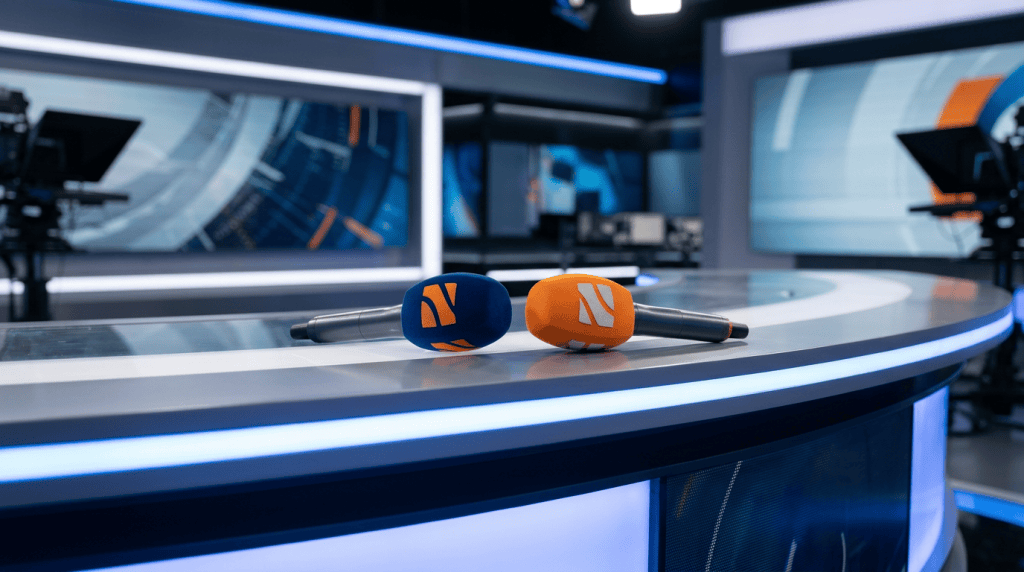
On-camera appearance. Fur windscreens are not designed for on-camera use on interview or presentation microphones. They are bulky, visually distracting, and do not suit the professional look of broadcast television. For any microphone that appears on screen – handheld mics, desk mics, podium mics – foam windscreens remain the correct choice. They can also carry branded logos and channel identities, which is an important consideration for broadcast organisations. You can read more about how foam windscreens are used in professional broadcast contexts at Why Broadcasters Use Foam Microphone Windscreens.
Studio and controlled environments. A dead cat windscreen in a broadcast studio is unnecessary and acoustically suboptimal. The fur material adds a small degree of high-frequency damping that, while minimal, is pointless when there is no wind to protect against. Foam handles studio conditions easily and keeps the setup clean.
Branded applications. If the windscreen needs to carry a logo, foam is the only practical option. Fur windscreens cannot be printed or branded in any meaningful way. For broadcast organisations where windscreen branding is part of the visual identity – which it is for most professional broadcasters – foam is non-negotiable for camera-facing microphones.
Choosing Between Foam and Fur for Your Kit
The practical guidance for most broadcast and production operations is straightforward: invest in high-quality foam windscreens for your camera-facing and studio microphones (consider branded options for on-screen mics), and carry dead cat windscreens as specialist kit for the boom and camera-mounted shotgun microphones that will face sustained outdoor wind.
You do not need to choose one or the other universally. Most professional kits contain both, used in the right place. The key is knowing which conditions demand which solution – and not cutting corners in either direction.
For foam windscreens suited to handheld, studio and camera-mounted broadcast microphones, visit line-in.eu.
For a full comparison of foam and fur across all broadcast scenarios, see the main guide: Foam vs Fur Windscreen: How to Choose the Right Wind Protection. To understand exactly how far foam goes outdoors before it struggles, see Foam Windscreen Outdoor Use: 4 Factors That Determine How Far It Goes. For broadcast-specific windscreen selection, see Mic Windscreen for Broadcast: 6 Ways the Right Choice Affects Your On-Air Quality.
FAQ
What is a dead cat windscreen?
A dead cat windscreen is a fur-covered wind protection accessory for microphones, most commonly used on boom and shotgun mics in outdoor environments. The long synthetic fibres create a deep boundary layer that attenuates turbulent airflow more effectively than foam alone.
Can I use a dead cat windscreen on a handheld microphone?
Technically yes, but it is very unusual in practice. Handheld microphones used in broadcast are almost always fitted with foam windscreens for appearance and branding reasons. Dead cats are primarily used on boom, shotgun, and camera-mounted microphones.
Does a dead cat windscreen affect audio quality?
A fur windscreen adds some slight high-frequency damping compared to foam alone, particularly at higher wind protection levels. In practice, on a good-quality fur windscreen, this is minimal and acceptable given the protection offered. In calm conditions, foam is acoustically preferable.
What is a “dead kitten” windscreen?
A dead kitten is a smaller version of a dead cat windscreen, designed for compact or mini shotgun microphones. The name follows the same pattern as its larger counterpart.
How do I know when wind is too strong for foam?
Monitor through headphones. If you hear a low-frequency rumbling or buffeting sound that does not represent a real sound source, your foam windscreen is being overwhelmed by wind turbulence. Switch to fur or a combination system.
Are dead cat windscreens waterproof?
No – fur windscreens can hold moisture if they get wet, which can affect performance and weight. Some synthetic fur materials dry faster than others. In rain, additional protection (a rain cover or shelter) is advisable.