Foam or fur – it sounds like a simple question. In practice, most broadcast professionals get it wrong at least once, usually by reaching for fur when foam was enough, or by trusting foam when the conditions had already moved past it.
This guide works through each scenario directly – studio, outdoor ENG, sports, documentary – so you can make the call before the shoot, not during it.
Table of Contents
How Foam and Fur Windscreens Work
The physics of wind noise
Wind noise on a microphone is caused by turbulence – air moving across the capsule in an irregular, uncontrolled way. The solution is to slow that air movement down before it reaches the microphone element. Both foam and fur achieve this through the same fundamental mechanism: they force moving air to travel through a porous, resistive material that dissipates turbulent energy.
The difference lies in the density and depth of that material. Foam uses a network of open cells to break up airflow. Fur (whether synthetic or natural) creates a longer, deeper boundary layer that turbulent air must pass through. The longer the path, the more effectively high-velocity gusts are attenuated – which is why fur windscreens generally outperform foam in strong wind.
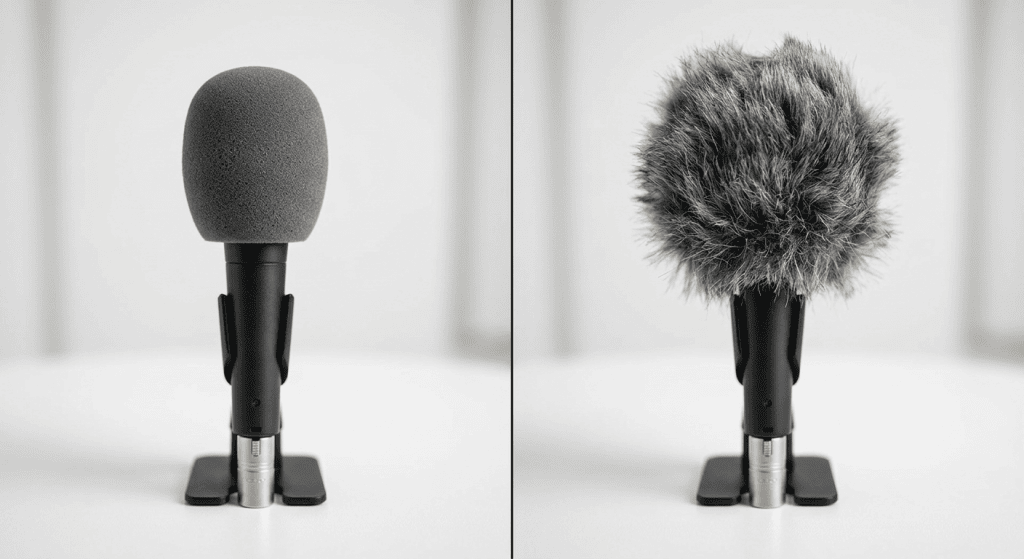
Foam windscreen construction
A quality foam windscreen is made from open-cell polyurethane foam with a specific pore size. Too fine a pore structure and you begin to attenuate high frequencies and muffle the audio. Too coarse and the wind protection deteriorates. Reputable manufacturers like Foam Conversion in the UK engineer their foam to balance acoustic transparency with wind attenuation, which is why professional broadcast-grade foam windscreens sound noticeably better than generic alternatives.
The foam fits snugly over the microphone grille, covering the capsule area. For handheld microphones this is typically a cylindrical or bullet-shaped cover. Miniature lavalier covers follow the same sizing logic – our lavalier windscreens range covers the common capsule sizes. For camera-mounted shotgun microphones, elongated barrel designs are used. Studio microphones take larger rounded or elliptical covers sized to the specific mic body.
Fur windscreen construction
Fur windscreens – commonly called dead cats, zeppelins, or blimp covers – add a layer of long-fibre material (usually synthetic, occasionally natural fur) over either the microphone directly or over a foam layer. The long fibres create a thick turbulence-breaking boundary that is highly effective in wind speeds that would defeat foam alone.
The trade-off is bulk and visibility. A fur windscreen is significantly larger and more visually prominent than foam. In studio and controlled environments, this is usually undesirable. In the field, it is a practical necessity when the wind is strong enough.
Foam vs Fur Windscreen: Scenario Breakdown
Studio and controlled environments
In a broadcast studio, there is essentially no ambient wind. Air conditioning creates minor airflow, but at velocities so low that any quality foam windscreen handles it easily. Foam wins here on every count: it keeps the microphone looking professional on camera, allows full branding visibility if the windscreens carry logos, and adds no unnecessary bulk to the desk setup.
A foam windscreen in studio also matters for plosives – those low-frequency thump sounds from consonants like “p” and “b” that hit the microphone hard during close-mic vocal performance. Foam provides a gentle diffusing layer that slightly reduces direct air blast from the speaker’s mouth. It is not as effective as a dedicated pop shield, but it helps.
For radio stations, TV studios, and any controlled indoor environment, foam windscreens are the standard choice and the correct one.
Light outdoor conditions
Light outdoor conditions – a light breeze on a dry day, outdoor interviews where the crew has some control over mic positioning – fall into a middle zone. Here, foam can be sufficient if the foam is good quality and the microphone is handled correctly. Keeping the mic angled slightly away from the wind direction, positioning yourself with your back to the breeze, and working at a reasonable distance from the subject all reduce wind exposure.
When foam starts to fail in light outdoor conditions, the result is a low-frequency rumble that builds and breaks up recordings. If low-frequency rumble starts appearing on the recording, foam has reached its limit – a fur upgrade is needed.
ENG and run-and-gun field work
Electronic News Gathering (ENG) crews work fast, often in unpredictable weather, with no time to carefully manage microphone positioning. A reporter covering breaking news at an outdoor press conference, or a camera operator following a subject on a windy street, cannot always control the mic angle relative to the wind.
This is the classic scenario where the foam vs fur windscreen decision becomes genuinely consequential. For ENG work in variable or windy conditions, a fur windscreen or a combination system (foam inside a blimp with a fur exterior) is the professional standard for camera-mounted shotgun microphones. The audio stakes on a live or broadcast-critical take are simply too high to risk foam alone in a gusty environment.
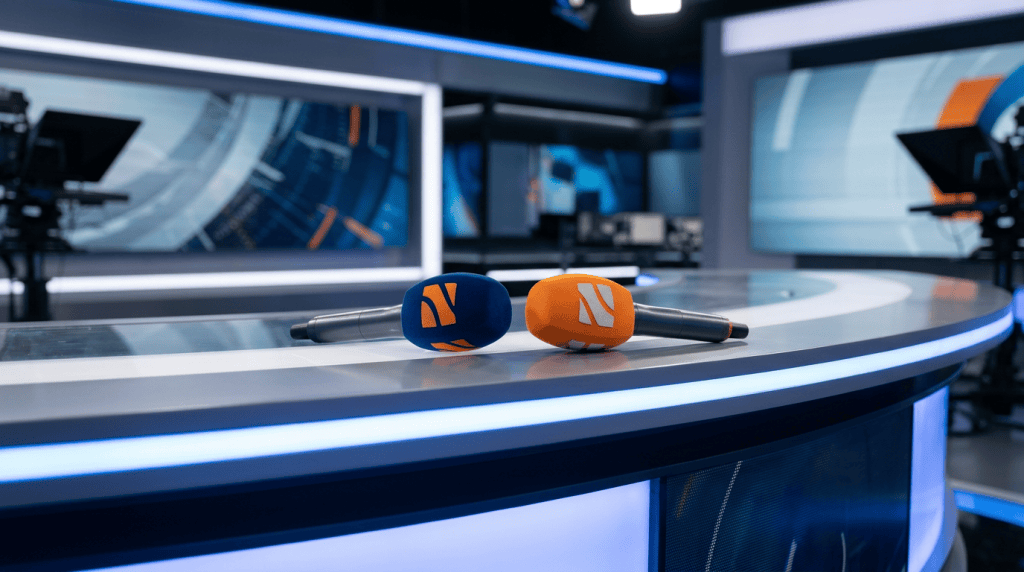
That said, reporters carrying handheld microphones for on-camera interviews are a different situation. Here, foam windscreens are still common because they maintain a clean, professional look on camera and the reporter can physically manage the mic position. Branded foam windscreens in particular are a key part of the broadcaster’s on-screen identity.
One detail that often gets overlooked: the distinction matters differently for the handheld and the boom. A reporter holding a Sennheiser MD 46 on camera keeps foam – it looks right, it carries the station’s branding, and a professional manages wind exposure through mic technique. The camera-mounted shotgun above the frame is a different problem entirely. That microphone cannot be repositioned during a take. In variable wind, it needs fur or a combination system.
Sports coverage and outdoor events
Sports coverage – pitch-side commentary, outdoor athletics, motorsport – typically involves sustained exposure to ambient wind with no ability to reposition. Commentary positions at stadiums can be consistently windy, and pitch-side mics get buffeted constantly.
For fixed boom microphones or camera-mounted mics in these environments, fur or combination windscreens are often warranted. However, for the handheld microphones used by presenters and reporters appearing on camera, foam remains the norm – both for professional appearance and because presenters working close to mic can manage the effect of wind through technique.
Documentary and film field recording
Location sound recordists working on documentary and drama productions in exposed locations have historically favoured blimp-and-fur systems for boom microphones. The audio quality demands are unforgiving, and wind noise on a film shoot can mean costly re-recording.
For these applications, the fur windscreen is not optional – it is standard kit. However, many location recordists also carry foam windscreens for protected environments (interiors, calm weather) where the acoustic clarity of a lightly dressed microphone is preferred and the bulk of a blimp is unnecessary.
Why Foam Windscreens Remain the Broadcast Standard
Despite the existence of fur windscreens for over half a century, foam windscreens remain the dominant choice in broadcast for several practical reasons.
Appearance on camera. Foam windscreens look professional, clean, and intentional on camera. Fur windscreens, while effective, are not designed to appear on screen in the same way. For any camera-facing microphone – handheld mics, desk mics, podium mics – foam is the visual default.
Branding. Branded foam windscreens carry logos, channel names, and colour identities that make them valuable communication tools. A foam windscreen printed with a broadcaster’s branding appears in every interview, event, and outside broadcast. This is simply not possible with fur windscreens. For news organisations and broadcast groups, branded foam windscreens are a core part of their visual identity toolkit. You can explore the range of custom branded windscreens at line-in.eu.
Acoustic transparency. A well-engineered foam windscreen is effectively invisible to the microphone. It adds no colouration, no high-frequency roll-off, no change to the polar pattern. This matters in broadcast because the windscreen is always on – it is not something you remove for critical takes. If the foam changes the sound, it is either the wrong density or it has degraded and needs replacing.
Practicality. Foam windscreens are lighter, easier to fit and remove, more durable in everyday use, and simpler to clean than fur alternatives. For organisations ordering windscreens in quantity – a TV station kitting out a fleet of interview microphones, for instance – foam is far more practical to manage.
Combination Solutions: When You Need Both
Some microphone applications call for layered protection. The classic broadcast solution for outdoor shotgun microphones is a foam-lined blimp (a rigid cage) with a fur exterior. The foam inside provides acoustic isolation and the first layer of wind protection; the fur exterior breaks up the turbulence before it even reaches the blimp. This combination can handle strong, sustained wind that would defeat either material alone.
For handheld microphones used outdoors in consistently difficult conditions, some crews fit a foam windscreen and then add a thin synthetic fur sock over the top. This adds protection while maintaining a degree of on-camera professionalism, though it is less common in practice than the pure foam approach.
Making the Right Choice for Your Operation
The foam vs fur windscreen decision is ultimately a question of environment and priority. Ask yourself:
– Will this microphone appear on camera? Foam is almost always the right answer.
– What wind conditions will the microphone face? In studio or light outdoor use, foam is sufficient. In sustained outdoor wind above a light breeze, plan for fur or a combination system for any microphone not camera-facing.
– Does branding matter? If the windscreen needs to carry a logo, foam is the only practical option.
– What are the audio quality stakes? For broadcast-critical one-take recording in wind, do not gamble on inadequate protection.
For most broadcast operations – radio stations, TV news, event coverage – foam windscreens handle the vast majority of situations. Fur is specialist kit for specific scenarios: boom microphones in exposed outdoor positions, documentary work in difficult locations, sports coverage where the camera microphone is not on screen. The mistake is treating fur as the “professional” default and foam as the budget option. They solve different problems.
For help choosing the right foam windscreen for your specific microphone models, the line-in.eu shop – Foam Conversion UK and Radius Windshields official representative covers a range of shapes and sizes for handheld, studio, and camera-mounted applications.
Related Articles in This Series
This guide is part of a series covering wind protection for broadcast and production professionals:
– Dead Cat Windscreen: 5 Situations Where Fur Beats Foam – a closer look at when fur windscreens are the right call and when they are not
– Foam Windscreen Outdoor Use: 4 Factors That Determine How Far It Goes – understanding the real-world limits of foam in outdoor conditions
– Mic Windscreen for Broadcast: 6 Ways the Right Choice Affects Your On-Air Quality – practical guidance for TV and radio stations choosing windscreens for their microphone fleet
– How to Choose Mic Windscreen Size: A Practical Sizing Guide – how to measure correctly and avoid common fit mistakes
FAQ
Is a fur windscreen always better than foam?
No. Fur windscreens outperform foam in strong outdoor wind, but foam is better for studio use, on-camera appearance, branding, and acoustic transparency. The right choice depends on your specific use case.
Can I use a foam windscreen outdoors?
Yes, in light to moderate conditions. Quality open-cell foam handles light breezes effectively. In gusty or sustained wind, you will likely need to upgrade to a fur or combination system for non-camera-facing microphones.
Why do broadcasters use foam windscreens on handheld mics instead of fur?
Primarily because foam maintains a professional on-camera appearance and supports logo branding. Reporters and presenters work close enough to the mic and can manage their position well enough that foam provides adequate protection in most broadcast scenarios.
What is a dead cat windscreen?
A dead cat (or dead kitten for smaller mics) is a fur windscreen – named for its resemblance to a long-haired fur covering. It is used primarily on boom and shotgun microphones in exposed outdoor environments.
Does foam affect sound quality?
High-quality open-cell foam introduces minimal colouration. Broadcast-grade foam windscreens are engineered to be acoustically transparent within the microphone’s working frequency range. Low-quality foam can attenuate high frequencies noticeably.
Can foam windscreens be branded with a logo?
Yes. Custom foam windscreens can be printed with logos, channel names, and brand colours using UV printing or pad printing. This is standard practice in broadcast and journalism. See custom mic windscreens for details.