A foam windscreen sits between the microphone capsule and the environment, acting as the first point of contact with sound and moving air. In practice, the material and internal structure largely determine whether sound passes through naturally or gets altered. When sound meets foam, its path depends on both density and cell structure, which control airflow and turbulence. This is crucial in real-world use: it helps microphones capture clear, natural audio without introducing unwanted artifacts, directly influencing foam windscreen sound quality.
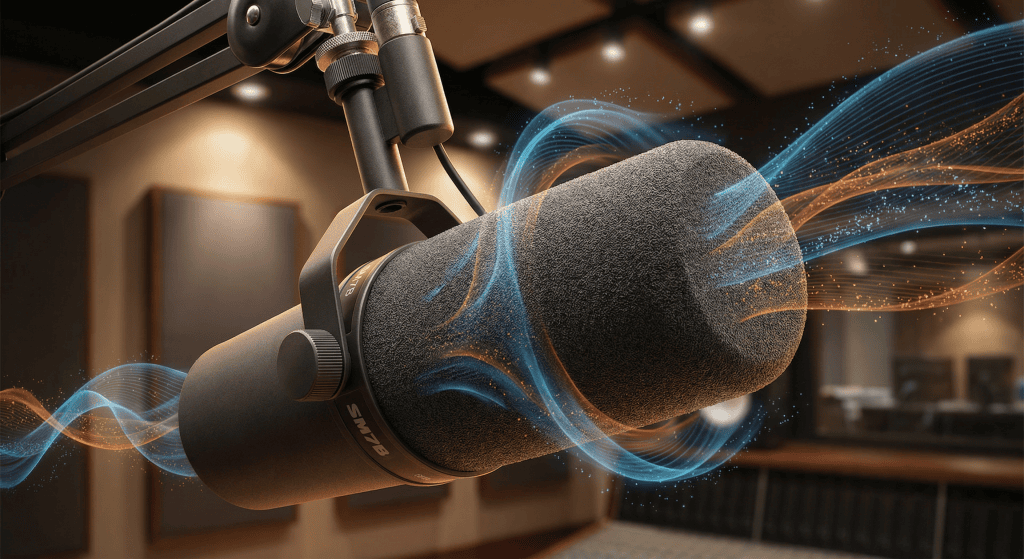
Table of Contents
Understanding Acoustic Foam vs Generic Foam for Sound Quality
The difference is usually obvious in recordings. Generic foam-like the kind used for packaging or cheap mic accessories-has dense, irregular cells. When sound hits it, airflow scatters unpredictably, causing distortion. Engineers often notice that voices sound muffled or less present, even if wind noise is reduced.
Acoustic foam is designed with sound in mind. Its base material is flexible yet stable, cells guide airflow predictably, and production ensures uniformity. In real-world recordings, this means sound passes through clearly. Wind and breath turbulence are smoothed out, while speech details remain intact. This design directly improves foam windscreen sound quality compared to generic alternatives.
Open-cell structure and airflow for better sound
Open-cell foam has interconnected pores that let air and sound pass rather than being blocked. When wind or breath hits the windscreen, turbulent air spreads through thousands of small channels. By the time it reaches the microphone capsule, the energy is diffuse and slowed. Practically, this means fewer pressure spikes while the structured pressure changes of sound pass largely undisturbed.
This works because sound consists of organized pressure variations, whereas wind is disorganized. In real-world use, open-cell foam filters turbulence while transmitting the energy of sound. Finer, uniform cells let high-frequency details through, so consonants and sibilants remain clear-key to maintaining top-notch foam windscreen sound quality.
Foam Density and Wall Thickness: Influencing Sound Quality
Once the open-cell structure is in place, density and wall thickness become key. Denser foam and thicker walls resist airflow more. In outdoor or on-location recordings, this reduces the impact of wind and breath turbulence on the mic, directly enhancing foam windscreen sound quality.
High frequencies are particularly sensitive because their short wavelengths are easily affected by obstacles. Engineers notice that very dense foam slightly reduces sibilants, while low and mid frequencies pass with little change.
Balancing protection and intelligibility
Broadcast-grade foam aims to balance protection and transparency. Density diffuses turbulent airflow, but walls remain thin enough for high frequencies. In real-world use, consonants and sibilants stay clear, while the windscreen still protects. Proper cell geometry and wall thickness soften only the extreme top frequencies, keeping the critical speech range intact. This careful engineering ensures consistent foam windscreen sound quality.
Generic foam, by contrast, has irregular cells and walls, scattering or absorbing highs unpredictably. The result: muffled speech, reduced presence, even if wind protection is fine.
Frequency Response and Speech Clarity
Clarity depends on keeping the frequency ranges that carry intelligibility. Consonants-sibilants, fricatives, stops-fall roughly between 2 and 8 kHz. The presence range, around 2-5 kHz, gives the voice immediacy and definition. Poorly designed foam attenuates these frequencies, making voices sound distant or dull. Experienced engineers notice this immediately.
Controlled acoustic foam lets short-wavelength sounds pass with minimal scattering. In practice, microphones capture the natural dynamics of speech. This happens because of cell geometry and density, not marketing claims: properly engineered foam is acoustically transparent in the critical speech range, enhancing foam windscreen sound quality for broadcast applications.
Professional Broadcasters and High-Quality Foam
Professional foam maintains its structure over time. Cheap foam degrades: repeated compression, moisture, or UV exposure changes its acoustic behavior. Engineers see that aged foam increases high-frequency attenuation as cells collapse. Broadcast-grade foam resists these changes, keeping density and geometry consistent.
Consistency matters because microphones are used across cameras, studios, and locations. Variations in windscreen performance can introduce unexpected differences. Broadcast-grade foam ensures predictable results, preserving clarity and protection wherever it’s used, stabilizing foam windscreen sound quality in professional setups.
Testing Foam Impact on Sound
One approach: record the same speech with and without the foam in still air. A high-quality windscreen preserves consonants and presence while reducing plosive spikes. Noticeable dulling indicates excessive attenuation, often from degraded or unsuitable foam.
Another method: read plosive-heavy phrases directly into the mic. Correct foam absorbs plosives but leaves vowels and consonants intact. Overly dense or poorly structured foam reduces both, signaling it’s not suitable for professional use.
Final Thoughts on Foam Windscreen Sound Quality
The performance of a foam windscreen comes down to engineering, not marketing. Open-cell acoustic foam with controlled density and uniform cells reduces wind and plosive noise while preserving frequencies crucial for speech. Density, wall thickness, and cell structure interact: higher density improves wind rejection but slightly softens highs; lower density preserves transparency but gives less protection.
In practice, using foam designed for acoustic applications ensures predictable, consistent performance. A windscreen that protects the mic while maintaining clarity is an essential part of professional broadcast setups, reliably stabilizing the audio signal chain and maximizing foam windscreen sound quality.
FAQ: Foam Windscreen Sound Quality
What is the main purpose of a foam windscreen?
A foam windscreen primarily reduces wind noise, breath pops, and plosive sounds while allowing natural speech frequencies to pass. Properly designed foam ensures that sound clarity is preserved, directly impacting foam windscreen sound quality.
How does foam density affect sound?
Denser foam diffuses turbulent airflow more effectively, reducing wind and plosive spikes. However, very dense foam can slightly soften high-frequency details like sibilants. The balance between density and transparency is key for broadcast audio.
What’s the difference between acoustic foam and generic foam?
Acoustic foam has controlled cell geometry and uniform density, allowing predictable sound transmission. Generic foam often scatters or absorbs high frequencies unpredictably, leading to muffled voices despite reducing wind noise.
Can I test if my windscreen affects my sound quality?
Yes. Record the same speech with and without the foam in still air. A high-quality windscreen should preserve consonants and presence while reducing plosive spikes. Noticeable dulling indicates the foam may be too dense or worn out.
Why do professional broadcasters choose high-quality foam?
Professional foam maintains consistent density and cell structure over time, resisting compression, moisture, and UV damage. This ensures predictable sound quality across studios, cameras, and recording locations, stabilizing foam windscreen sound quality.
Does foam affect all frequencies equally?
No. Low and mid frequencies generally pass through with minimal effect. High frequencies are more sensitive, so improper or worn foam can soften consonants and sibilants, reducing speech clarity.