
Rode Wireless GO Windshield — Standard Branded Foam Cover
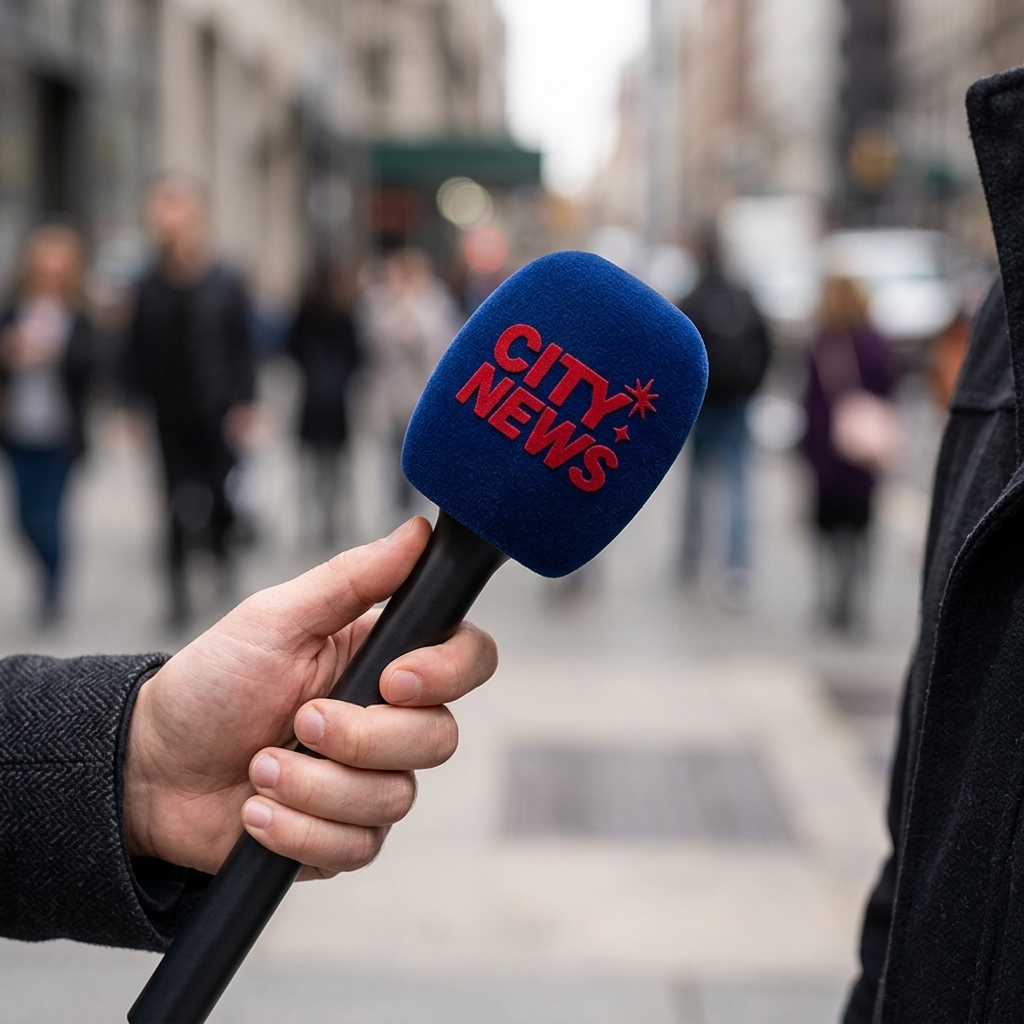
The Rode Wireless GO windshield presented a problem that standard foam windscreens do not solve: the transmitter body is rectangular, and conventional round-bore windscreens do not fit it properly. This cylindrical foam windshield addresses that directly. The exterior is cylindrical — providing even wind coverage from all directions. The internal cavity is rectangular, cut to the dimensions of compact wireless transmitters used with handle adapters for handheld interview production. Available with a custom logo imprint for broadcast branding.
Why This Rode Wireless GO Windshield Has a Rectangular Internal Cavity
Most foam windscreens are engineered for round or elongated microphone capsules. The Rode Wireless GO transmitter — along with the DJI Mic, Hollyland Lark, and similar compact wireless systems — has a rectangular body that clips into a handle adapter to function as a handheld interview microphone. A round-bore windscreen placed over that body makes contact only at the corners. The seal is poor, the fit is unstable, and the windscreen shifts under any active use condition.
The internal cavity in this windshield matches the rectangular transmitter profile precisely. The cavity dimensions accommodate transmitters from 45 to 55 mm in width and 20 to 30 mm in thickness. The foam is elastic — it grips the transmitter firmly without adhesive, and compensates for minor dimensional variation across compatible models. The exterior shape remains cylindrical throughout. Only the internal geometry differs from a standard round-bore windscreen.
Construction and Acoustic Function
The windshield is manufactured from open-cell acoustic foam selected for its combination of acoustic transparency and mechanical flexibility. Open-cell structure allows the audio signal to pass through without significant coloration, while the foam matrix absorbs and diffuses wind turbulence before it reaches the microphone capsule.
In handheld interview contexts, the acoustic challenges extend beyond ambient wind. Breath noise from the speaker and proximity plosives degrade the signal in close-range recording situations. The foam layer provides consistent protection against all three: wind, breath, and plosive energy. Speech clarity and voice character are preserved across the operating frequency range.
Compatible Wireless Microphone Systems
This windshield is compatible with the following wireless microphone systems when used with a handle adapter:
- RØDE: Wireless GO (Gen 1, Gen 2, Gen 3), Wireless ME, Wireless PRO
- DJI: Mic (original), Mic 2, Mic 3
- Hollyland: Lark Max, Lark Max 2, Lark M1
- Saramonic: Blink 500 B1/B2, Blink 900 B2, BlinkMe, Ultra
- BOYA: BY-XM6-S1/S2, Magic, Mini 2, BY-V4
- Comica: Vimo C / C3, BoomX-D D2, Vimo Q
- SYNCO: G1 (A1/A2), G2 (Max/A2), G3 Pro
- Other: Sennheiser Profile Wireless, Movo WMX-2 / Wireless Mini, Godox Virso M2, FULAIM X5-M
Compatible handle adapters include the Rode Interview GO, Movo WMX-HM / WMX-HM2, Macrokraft handle, and generic adapters available through standard equipment suppliers. Verify transmitter dimensions against the 45–55 mm width and 20–30 mm thickness range before ordering. See our microphone windscreen size guide for additional fitting guidance.
Logo Configuration
The cylindrical shape presents two logo positions: front and back. In a handheld interview setup one face is always visible to camera, regardless of microphone orientation. Standard configuration is a single-color logo imprint — white artwork on black foam, black on white, or any combination from the available color range. Multi-color imprints are available on request and are discussed individually based on artwork and color requirements. An unbranded version is available for productions that do not require visual identification.
Available Colors
The standard production range covers nine foam colors: Black, Red, Blue, Green, Pink, White, Purple, Yellow, and Orange. These are fixed production shades without Pantone or RGB specification. For productions that require precise color matching against brand guidelines, the professional custom line from Foam Conversion UK provides exact Pantone, RGB, and CMYK color accuracy.
Usage and Workflow Integration
The primary use case is handheld interview production: the transmitter clips into a handle adapter, the windshield slides over the transmitter body, and the setup is operational. No tools, no adhesive. The workflow is fast enough for ENG conditions — press conferences, street interviews, event coverage — where setup time is constrained and equipment reliability is not negotiable.
For moderate outdoor wind, the foam layer provides sufficient attenuation. In high-wind environments, pairing the windshield with a fur cover (deadcat) adds a second layer of protection. EBU recommendations on location audio identify layered wind protection — foam combined with fur — as the standard approach for exposed outdoor recording conditions.
Secondary applications include field reporting, documentary interviews, and corporate video where a branded microphone presence is required without the infrastructure of a traditional boom configuration.
Professional Context
This windshield is precision-cut from acoustic foam with consistent cell structure throughout. The material maintains its dimensions under normal operating conditions and does not deform over extended use. Maintenance requires rinsing with lukewarm water and complete air drying before storage.
Compact wireless systems — the Rode Wireless GO series, DJI Mic, and their equivalents — have become standard production equipment across television news, documentary, podcast, and corporate video. Purpose-built wind protection for these systems has remained scarce in the standard market. This windshield fills that gap, combining the acoustic function of a purpose-fit foam windscreen with the visual branding capability required by professional broadcast and media production teams.

Reviews
There are no reviews yet.