
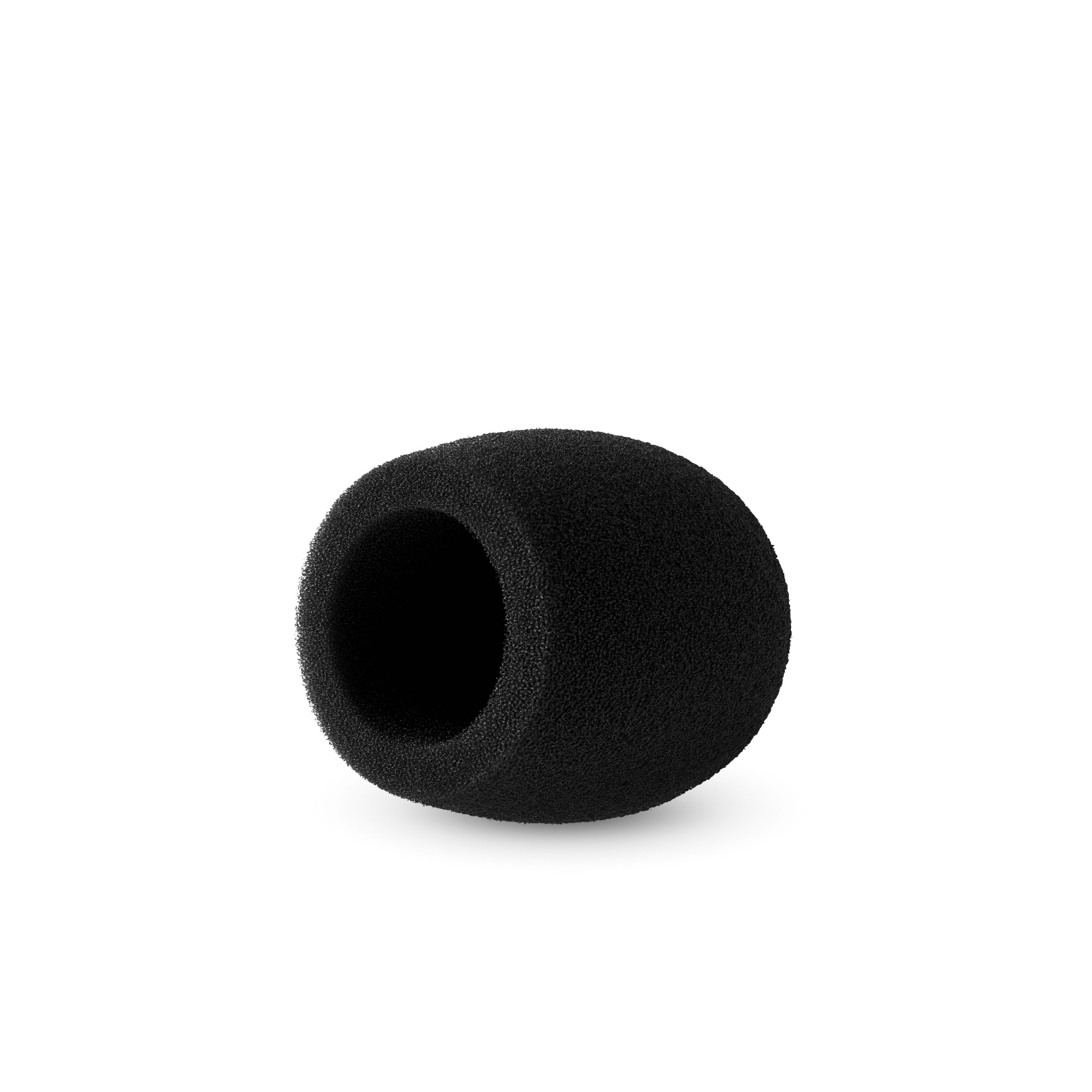
Professional 4cm Handheld Microphone Foam Windshield
This professional handheld microphone foam windshield provides essential wind and plosive protection for broadcast and recording applications. The 4cm length design accommodates standard handheld microphones including the Shure SM58, delivering reliable performance across various recording environments.
Construction and Materials
Manufactured in the United Kingdom from semi-open cell acoustic foam, this windshield maintains audio transparency while providing mechanical protection. The material composition resists UV degradation and moisture absorption, addressing common failure modes in broadcast accessories. Unlike standard consumer foams that deteriorate rapidly, this windshield maintains structural integrity through extended use.
The 55mm opening diameter accommodates grille assemblies on popular handheld microphones. The semi-open cell structure allows natural airflow while creating sufficient acoustic impedance to attenuate wind noise and breath impacts.
Compatible Microphones
The 55mm opening fits several industry-standard handheld microphones including the Shure SM58, Electro-Voice RE-50, Neumann KMS 104/105, and Sennheiser e835. The 4cm length provides adequate coverage for these microphone grille designs while maintaining easy handling characteristics.
Compatibility extends to other handheld microphones with similar grille diameters, making this windshield suitable for mixed microphone inventories in broadcast facilities and rental operations.
Broadcast Applications
In broadcast environments, this foam windshield addresses multiple acoustic challenges. Reporter interviews conducted outdoors benefit from wind noise reduction without requiring larger windscreen systems. Studio applications gain protection against talent breath noise and microphone handling artifacts.
The windshield performs effectively in controlled studio environments where air conditioning systems create minor air movement, and in field recording where ambient air currents affect microphone performance. News gathering operations rely on this type of protection for consistent audio quality across varying conditions.
Professional Workflow Integration
The windshield attaches quickly to microphone grilles, facilitating rapid setup in time-sensitive broadcast scenarios. The foam compression allows secure mounting while permitting easy removal for cleaning or replacement. Multiple units can be maintained in production kits to ensure availability during multi-microphone shoots.
Production workflows benefit from the windshield’s low-profile design, which maintains microphone visibility for on-camera applications while providing necessary acoustic protection. The neutral appearance integrates cleanly with professional broadcast aesthetics.
Acoustic Performance Characteristics
The semi-open cell foam structure provides graduated acoustic impedance that attenuates low-frequency wind noise while preserving high-frequency response characteristics. This selective filtering approach maintains vocal clarity and microphone frequency response integrity.
Plosive sounds from consonants like ‘P’ and ‘B’ encounter sufficient resistance to reduce their impact on the microphone diaphragm. The foam density balances protection against acoustic transparency, avoiding the muffled sound quality associated with overly dense windscreen materials.
Durability and Maintenance
The UV-resistant formulation prevents foam degradation under studio lighting and outdoor broadcast conditions. Moisture resistance addresses humid environments and condensation issues that affect standard foam materials. The material maintains elasticity through temperature variations common in broadcast environments.
Cleaning involves gentle washing with mild soap solutions, followed by air drying. The semi-open cell structure facilitates water drainage while maintaining structural integrity. Regular inspection for wear or contamination ensures consistent performance standards.
Storage and Handling
Proper storage extends windshield service life and maintains hygiene standards in multi-user environments. Store in clean, dry locations away from direct sunlight to preserve material properties. Avoid compression that could permanently deform the foam structure.
Individual storage in protective containers prevents cross-contamination between users and maintains the foam’s acoustic properties. Replacement scheduling based on usage intensity ensures consistent protection levels across broadcast operations.


Reviews
There are no reviews yet.